Precautions for TPU Plastic Injection Molding
TPU is a widely used thermoplastic elastomer with excellent elasticity, toughness and wear resistance, making it suitable for seals, handles, rollers, hoses, protective cases and automotive components. However, TPU is highly sensitive to moisture, temperature, shear force and mold conditions, and improper processing often leads to bubbles, silver streaks, sticky surfaces, burning marks, warpage, poor demolding and dimensional instability. To achieve stable and high-quality production, strict control must be implemented in raw material treatment, temperature setting, injection parameters, screw configuration, mold design and daily operation.
Raw Material Drying
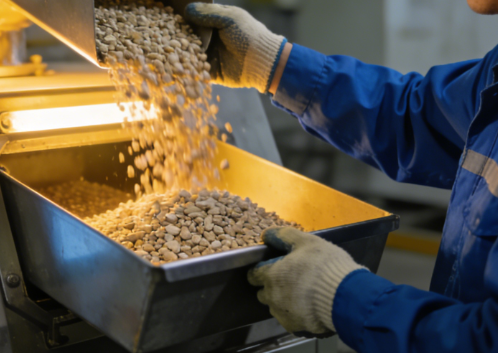
TPU has strong hygroscopicity. Moisture absorbed from air will cause hydrolysis under high-temperature injection, resulting in surface defects, internal bubbles and reduced mechanical properties. Therefore, sufficient drying is the most critical step before processing. TPU must be dried in a dehumidifying dryer or hot-air dryer at 80–100°C for 2–4 hours. Softer TPU grades usually require longer drying due to higher moisture absorption. The material layer should be kept thin to ensure uniform heating. After drying, the material must be sealed and protected from re-absorbing moisture. If production is suspended for more than 2 hours, the material should be dried again before restarting.
Temperature Control
TPU has a narrow processing temperature window. Overheating causes decomposition, discoloration, stickiness and strong odor, while insufficient temperature results in poor plasticization and incomplete filling. Barrel temperature is set in stages: rear zone 160–170°C, middle zone 170–180°C, front zone 180–190°C, and nozzle 175–185°C. The maximum temperature should generally not exceed 200°C. Mold temperature is controlled at 20–40°C for standard parts, and can be increased to 40–50°C for high-gloss or transparent products to improve surface quality. Stable mold cooling is essential to maintain consistent dimensions and surface finish.
Injection and Holding Pressure
TPU melt flows relatively easily, so medium injection speed is recommended. Excessively high speed causes turbulence, air entrapment and burning, while excessively low speed leads to flow marks and insufficient filling. Injection pressure should be moderate, only enough to fill the cavity completely. Holding pressure is usually set at 30–50% of injection pressure, with a holding time of 3–8 seconds, ending when the gate is just frozen. Overly high or long holding increases internal stress, causing sticking, ejection marks and warpage. Insufficient holding results in shrinkage marks and dimensional deviation.
Screw and Backpressure
TPU is sensitive to shear force. High shear increases melt temperature rapidly and causes degradation. A general-purpose or special screw with L/D ratio 20–22 and compression ratio 2.5–3.0 is suitable. Screw speed is controlled at 50–100 rpm, and backpressure at 3–8 MPa to ensure uniform plasticization without excessive shear heat. Before shutdown, the barrel must be emptied or cleaned with PE or PP cleaning material to prevent residual TPU from carbonization and contamination.
Mold Design
Mold structure significantly influences TPU molding quality. Runners should be short, thick and smooth, with circular cross-section preferred. Gates should be properly sized to avoid excessive shear heating. Effective venting is essential, with vent depth 0.02–0.04 mm, located at flow ends and weld lines. Since TPU products have high elasticity and tend to wrap around cores, a sufficient draft angle of 2°–5° is required for soft grades. The cavity should be highly polished, and the ejection system should have sufficient area to avoid deformation or damage during demolding.
Production and Post-Processing
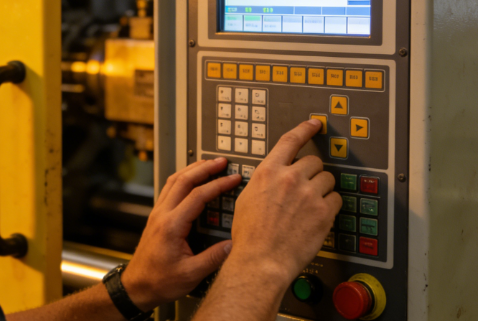
Only dry-type release agents are allowed; oily release agents may cause surface defects and affect bonding or printing. TPU generates static electricity easily, so the workshop should be kept clean and dust-controlled. Parts must be fully cooled before ejection to avoid sticking and deformation. Annealing at 60–80°C for 2–4 hours can reduce internal stress and improve dimensional stability. Recycled material can be used in a small proportion, generally below 20%, and must be fully dried before use.
Summary
Stable TPU injection molding relies on sufficient drying, moderate temperature, medium injection speed, balanced pressure, sufficient venting and reasonable mold design. With systematic and strict process control, manufacturers can effectively avoid common defects and produce TPU parts with excellent appearance, stable elasticity and reliable dimensional accuracy.