Technical Specification for Rubber Compression Strength, Rebound Performance and Abrasion Test Molds
The mechanical properties of rubber materials are core indicators for evaluating their engineering application value, among which compression strength, rebound performance and abrasion characteristics directly determine the service life and reliability of products. In addition to rubber compression strength test molds, rubber rebound performance test molds and rubber abrasion test molds, rubber tear strength test molds, rubber thermal aging test molds and rubber dielectric property test molds also play important roles in different application scenarios. With the development of the rubber industry towards high performance and functionalization, various test molds are jointly evolving towards modularization and intelligence, providing more accurate technical support for material R&D and quality control.
Rubber Compression Strength Test Molds
1. Mold Structure Design
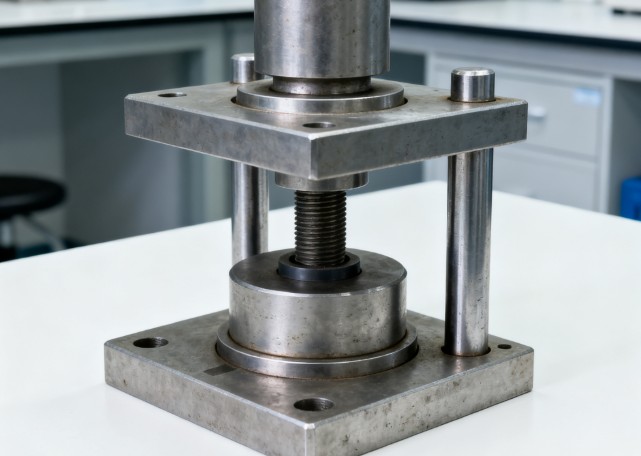
The compression strength test mold consists of an upper pressure head, a lower pressure base and positioning guide pillars. The size of the standard sample cavity is designed in accordance with industry general standards as 29mm in diameter × 12.5mm in height, suitable for conventional cylindrical samples. The guide pillars are made of 45# steel with quenching and tempering treatment, and the fit clearance is controlled within 0.02-0.05mm to ensure uniform force on the sample during compression and avoid test errors caused by lateral deviation.
2. Key Technical Parameters
Operating temperature range: -40℃~150℃, meeting the requirements of compression performance testing under high and low temperature environments
Maximum bearing pressure: 50kN, compatible with conventional universal testing machines
Surface roughness of pressure head: Ra ≤ 0.8μm, reducing the impact of friction coefficient on compression deformation
Parallelism error: ≤ 0.01mm/100mm, ensuring the parallelism requirement of upper and lower working surfaces
3. Operation Specifications
Clean the working surface of the mold to remove residual rubber debris before sample installation.
After placing the sample into the positioning cavity, ensure that the deviation of the coincidence degree between its axis and the mold central axis is ≤ 0.5mm.
When the compression rate is set to 5mm/min, the mold shall have no obvious vibration or abnormal noise.
After the test, perform stress relief treatment on the mold to avoid deformation accumulation caused by long-term use.
Rubber Rebound Performance Test Molds
1. Mold Composition and Principle
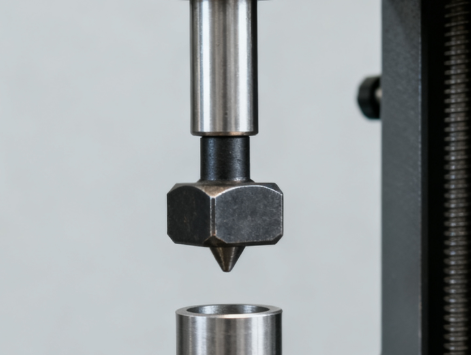
The rebound performance test mold adopts a drop hammer structure, mainly including a hammer guide cylinder, a sample clamping device and a height measuring scale. Designed in accordance with industry general standards, the hammer mass is 0.5kg, and the drop height is fixed at 500mm. The rebound rate is calculated by measuring the rebound height of the sample.
2. Core Technical Requirements
Perpendicularity of guide cylinder: deviation ≤ 0.1mm per meter, ensuring the vertical movement trajectory of the hammer
Positioning accuracy of clamping device: ±0.1mm, ensuring the coincidence between the sample center and the hammer impact point
Minimum division value of scale: 1mm, meeting the accurate measurement of rebound height
Surface hardness of hammer: HRC 58-62, with chrome plating treatment to improve wear resistance
3. Maintenance and Calibration
Check the lubrication condition in the guide cylinder weekly to keep the hammer moving smoothly without jamming.
Calibrate the rebound height monthly and verify the system accuracy with standard rubber blocks.
After long-term use, if the hammer wear exceeds 0.2mm, replace it in time to ensure test consistency.
Rubber Abrasion Test Molds
1. Typical Structural Forms
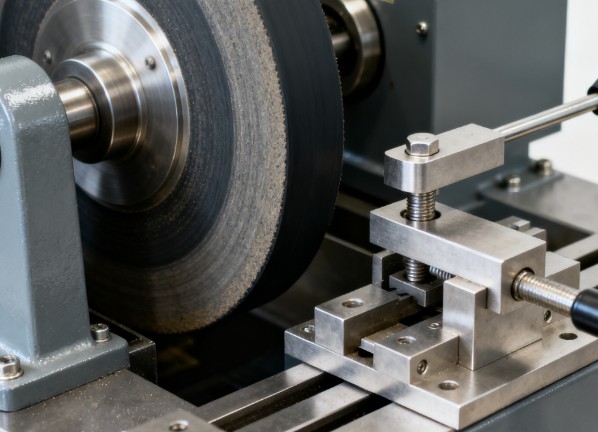
There are two main types of abrasion test molds:① Rotary drum type (DIN abrasion): It includes a sample holder, a grinding wheel (60 mesh) and a loading device, with the sample size of 16mm×19mm cylindrical.② Reciprocating type (Akron abrasion): It adopts a sample clamping structure inclined at 30°, matched with a grinding wheel with a diameter of 150mm.
2. Key Performance Indicators
Loading accuracy: ±0.5N, with the conventional test loading force of 10N or 5N
Rotational speed control: stepless adjustment from 40 to 100r/min, with rotational speed stability of ±1r/min
Abrasion stroke measurement accuracy: ±0.1m, with a cumulative stroke up to 1000m
Clamping force: adjustable from 50 to 200N, ensuring no slippage of the sample during the test
3. Application and Technical Trends
For the testing of new energy vehicle seals, a composite abrasion mold capable of simulating oil pollution environment has been developed.
Intelligent abrasion molds have integrated online dust collection and weighing systems, improving test efficiency by 30%.
Special-shaped sample fixtures manufactured by 3D printing technology can adapt to the abrasion testing of rubber products with complex cross-sections.
Mold Materials and Machining Processes
1. Material Selection
Working parts: Cr12MoV mold steel, with a hardness of HRC 60-62 after deep cooling treatment
Guide parts: 20CrMnTi with carburizing and quenching, and surface hardness of HRC 58-60
High-temperature test molds: GH4169 high-temperature alloy is selected to ensure dimensional stability in environments above 300℃
2. Machining Process Requirements
The key working surfaces are processed by ultra-precision grinding, with a flatness error of ≤ 0.005mm.
Aging treatment is required after heat treatment to eliminate internal stress and ensure dimensional stability.
Group assembly method is adopted during the assembly process to ensure consistent fit clearance of moving parts.
Conclusion
With the wide application of rubber materials in the field of high-end manufacturing, test molds are rapidly developing towards multi-parameter integration, environmental simulation and intelligence. In the future, innovative directions such as integrating the Internet of Things technology to achieve remote monitoring, adopting adaptive clamping structures to adapt to multi-specification samples, and developing modular designs to achieve rapid mold change will further improve test efficiency and applicability, providing more comprehensive technical support for new material R&D and product quality control. Mold manufacturing enterprises need to continuously improve machining precision and innovative design capabilities to meet the ever-upgrading industry test requirements.