Technical Characteristics and Application of Core Rubber Testing Molds
Rubber products are widely used in key fields such as automotive sealing systems, medical infusion supplies, and new energy battery seals. Their mechanical strength, vulcanization completeness, and physical stability directly determine the safety performance and service life of end products, while accurate testing is a key link to ensure these core indicators meet standards.
Three types of molds form the core equipment for rubber testing: rubber mechanical testing molds, rubber vulcanization testing molds, and rubber physical property testing molds. Mechanical testing molds provide standard-shaped specimens for mechanical indicators like tensile strength and elongation at break; vulcanization testing molds capture real-time torque and temperature changes during rubber vulcanization; physical property testing molds adapt to the evaluation of characteristics such as compression set and ozone aging resistance.
I. Rubber Mechanical Testing Molds
1. Structural Design and Standard Adaptation
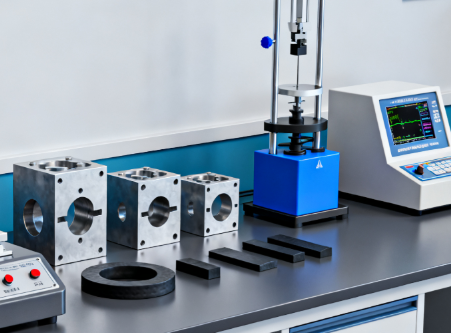
Mechanical testing molds feature a dumbbell-shaped core structure, adopting a three-section design: "gripping area - transition arc section - effective testing area". The gripping area is designed with a 15° wedge structure to prevent specimen slippage; the transition arc section uses an R5mm arc to reduce stress concentration; the effective testing area is a uniform cross-section rectangle to ensure uniform force. The mold adopts a split structure, with the mold clamping gap strictly controlled within 0.03mm to avoid rubber overflow affecting specimen integrity.
2. Core Technical Parameters
Compliance Standard: GB/T 528-2009 (equivalent to ISO 37:2011)
Main Specification: Type A dumbbell specimen – total length 115mm, effective section length 25mm, width 6mm
Material Performance: Cr12MoV mold steel, hardness reaches HRC 58-62 after heat treatment
Machining Precision: Mold cavity dimensional tolerance – IT7 grade
3. Production Application Points
It is used with flat vulcanizing machines, controlling mold temperature at 150℃±2℃ and pressure at 10-15MPa. Specimens need 24 hours of room-temperature storage to eliminate molding stress. It is mainly applied in testing scenarios such as tensile strength of automotive seals (requirement: ≥8MPa) and elongation at break of medical infusion tubes (requirement: ≥300%).
II. Rubber Vulcanization Testing Molds
1. Structural Features and Function Adaptation
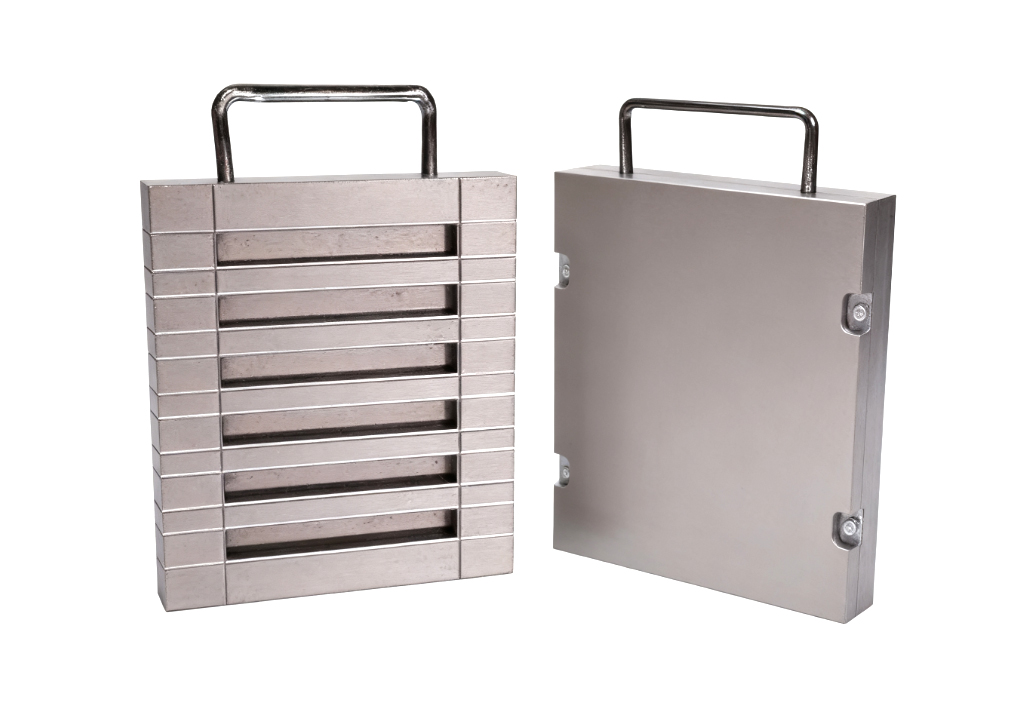
It adopts a rotorless oscillating cavity design to avoid rotor shear interfering with rubber vulcanization. The cavity is equipped with spiral cooling water channels, controlling cooling time within 10 minutes; micro-exhaust grooves (0.1mm×0.05mm) are set on the cavity sidewall to discharge volatile gases in time and avoid bubble defects. The mold integrates high-precision temperature and pressure sensors to realize real-time collection of vulcanization parameters.
2. Key Technical Indicators
Compliance Standard: ISO 6502-1:2025
Temperature Control Precision: Mold temperature stability within ±0.3℃
Temperature Range: Supports wide-range testing from room temperature to 200℃
Torque Precision: Measurement accuracy ±1%
3. Production Application Scenarios
It obtains parameters such as scorch time and optimal vulcanization time through vulcanization curves to guide production process settings. For example, a tire enterprise measured t'c (90) = 8min (at 150℃) for NR rubber; after optimizing the vulcanization process accordingly, the product’s wear resistance improved by 12%. It is widely used in vulcanization rate testing of rubbers such as silica gel and EPDM to ensure high-temperature sealing performance of seals.
III. Rubber Physical Property Testing Molds
1. Typical Structure and Design Logic
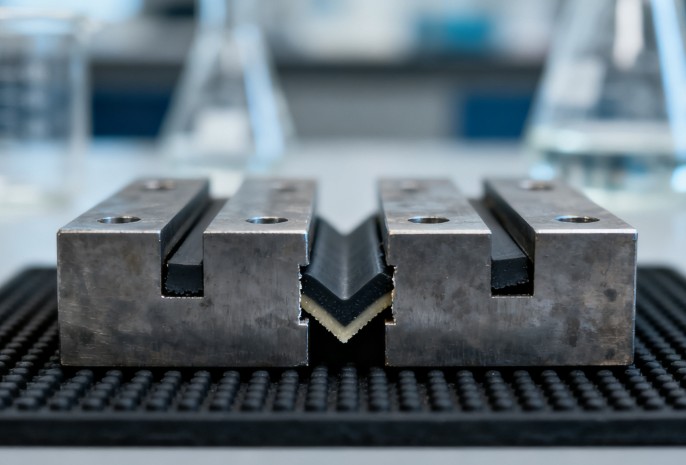
The main structures are flat-type and ring-type:
Flat-type: Adopts an open mold frame and positioning boss to ensure uniform specimen thickness.
Ring-type: Uses an integrated mold frame and 3-4 circumferentially evenly distributed feed ports to balance rubber flow.
Most molds adopt 1-4 cavity layouts to improve preparation efficiency; the contact surfaces of upper and lower molds are mirror-polished to reduce rubber adhesion.
2. Core Parameters and Standard Specifications
Flat-type mold: Complies with GB/T 7759-2015, produces specimens of φ29mm×25mm, parallelism requirement ≤0.01mm/100mm.
Ring-type mold: Complies with GB/T 1690-2010, produces specimens with inner diameter 17.8mm and cross-section 2.5mm, concentricity controlled within 0.02mm.
Surface hardness of both mold types: ≥HV 800 (meets high-precision laboratory testing needs).
3. Production Application Practice
Vulcanization time is adjusted (10-30 minutes) according to rubber types to avoid over-vulcanization or under-vulcanization. Flat-type specimens are used for compression set testing of shock-absorbing rubber pads (requirement: ≤30% under 23℃×24h); ring-type specimens are used for 24-hour ozone aging tests of tire side rubber to evaluate crack resistance.
IV. Popular Technical Trends in the Industry
1. Special Material Adaptation and Upgrade
To meet the needs of new energy vehicles and aerospace fields, mold materials are being upgraded to nano-amorphous silicon nitride coatings (Mohs hardness ≈9). This coating can improve the testing precision of rubber specimen wear resistance by 40%, adapting to the testing needs of extreme environment-resistant materials such as fluororubber. Currently, the application ratio of this coating in high-end molds has reached 35%.
2. In-depth Integration of Digital Testing
The penetration rate of molds integrated with AI data analysis systems is rising rapidly, expected to reach 68% by 2026. Built-in high-precision sensors collect real-time temperature and pressure data during molding; linkage with virtual testing systems realizes specimen state prediction, reducing testing error from ±0.5% to ±0.2%. It is especially suitable for testing high-end products such as medical-grade silica gel.
3. Rapid Response of Customized Modules
Molds with modular design have become mainstream: switching between different specifications of specimen preparation can be achieved within 3 minutes by replacing cavity modules, meeting the testing needs of multi-category and small-batch products. For emerging materials such as recycled rubber, special quick-change modules have been developed, improving testing efficiency by 50% compared with traditional molds, which aligns with the development needs of the circular economy industry.