Dumbbell-Type Test Molds,Ring-Type Test Molds and Flat-Plate Rubber Test Molds HoorenMold
In the full production process of rubber products, test molds are core tools for verifying material mechanical properties, aging characteristics and reliability. Among them, right-angle, arc-shaped and standard molds, together with dumbbell-type, ring-type and flat-plate rubber test molds, form a tool system covering mainstream test needs, directly affecting the accuracy of test data and product quality stability.
1. Technical Characteristics of Core Rubber Test Molds
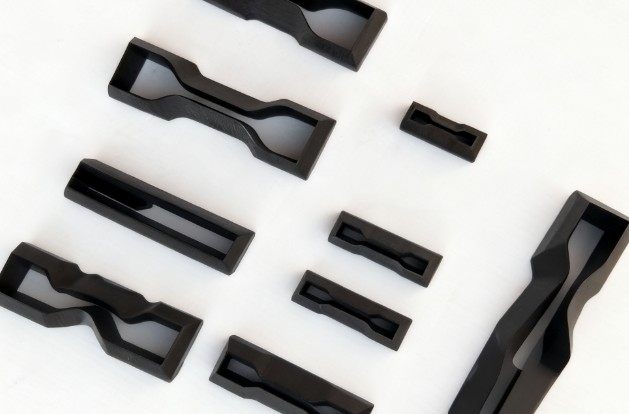
1.1 Dumbbell-Type Rubber Test Mold
Structural Design: Mainly used for preparing samples for tensile performance testing, the mold cavity adopts a three-section structure of "gripping end - transition section - effective test section". The gripping end is wedge-shaped (15°±1° angle) to prevent sample slipping during stretching; the transition section uses arc transition (R5mm±0.5mm radius) to reduce sample fracture deviation caused by stress concentration; the effective test section is a uniform cross-section rectangle to ensure uniform tension on the material. The mold adopts a split design, with the gap between upper and lower molds controlled within 0.03mm to prevent rubber overflow from affecting sample integrity.
Key Parameters: Complies with GB/T 528-2009 (equivalent to ISO 37:2011), with Type A dumbbell as the mainstream specification; sample size: total length 115mm±0.5mm, effective section length 25mm±0.5mm, width 6mm±0.2mm, thickness 2mm±0.2mm; mold material: Cr12MoV die steel, heat treatment hardness HRC58-62, surface chrome plating thickness 5-8μm; processing precision: cavity size tolerance IT7 grade, surface roughness Ra≤0.4μm.
Application Scenarios: Used for testing mechanical properties of vulcanized rubber (tensile strength, elongation at break, etc.), typical applications include tensile performance verification of automotive rubber seals, anti-fracture testing of wire and cable insulation rubber, and mechanical reliability evaluation of medical rubber products (e.g., infusion tubes). It is used with a flat vulcanizing machine, controlling mold temperature (150℃±2℃) and pressure (10-15MPa) to ensure sample forming consistency.
1.2 Ring-Type Rubber Test Mold
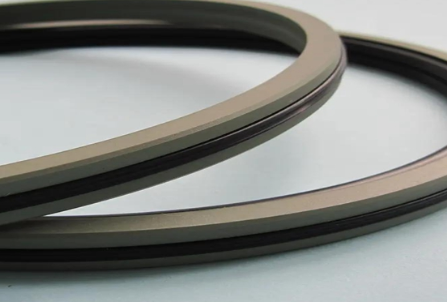
Structural Design: Designed for ring sample tests (ozone aging, compression fatigue), the cavity is a concentric ring structure. It adopts an integral mold frame to avoid concentricity deviation from split mold clamping, with positioning pins to ensure accurate alignment of upper and lower molds. The mold has 3-4 circumferentially evenly distributed feed ports to reduce sample density differences caused by uneven rubber flow; micro-exhaust grooves (0.1mm width, 0.05mm depth) are set on the cavity inner wall to discharge gas during vulcanization and prevent sample bubbles.
Key Parameters: Complies with GB/T 1690-2010 (equivalent to ISO 188:2011) and GB/T 2951.21-2008; common sample sizes: inner diameter 17.8mm±0.2mm (section diameter 2.5mm±0.1mm) or inner diameter 30mm±0.3mm (section diameter 5mm±0.2mm); concentricity precision: ≤0.02mm; cooling system: built-in spiral cooling water channel, cooling time ≤10min.
Application Scenarios: Core application for rubber ozone aging test (evaluating anti-cracking performance in ozone environment) and dynamic compression fatigue test (simulating elastic attenuation of seals after long-term use). Typical uses include ozone aging testing of tire side rubber, fatigue life evaluation of sealing rings, and environmental resistance verification of high-pressure rubber hoses. Samples need to be stored at room temperature for 24h before testing to reduce the impact of forming stress on data.
1.3 Flat-Plate Rubber Test Mold
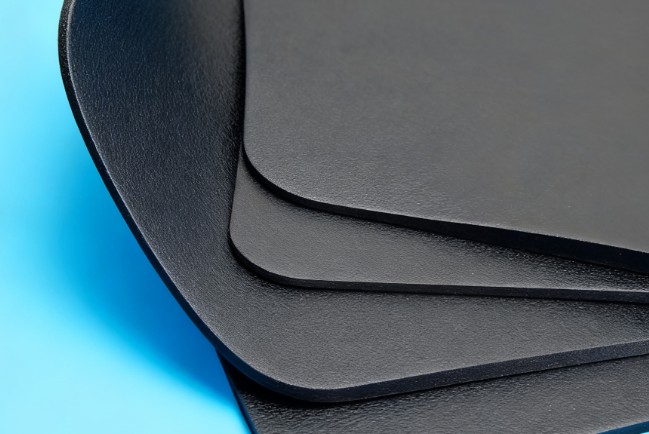
Structural Design: Used for preparing flat samples (compression set, hardness test), the cavity is circular or square (selected by test standard). It adopts an open mold frame for easy sample removal, with positioning bosses at the cavity bottom to ensure uniform sample thickness. The mold has a multi-cavity design (1-4 cavities commonly) to improve production efficiency; the contact surface of upper and lower molds is mirror-polished to reduce rubber adhesion and ensure sample surface flatness (avoiding impact on hardness test accuracy).
Key Parameters: Complies with GB/T 7759-2015 (compression set) and GB/T 531.1-2008 (hardness test); sample sizes: circular (29mm±0.5mm diameter, 25mm±0.5mm thickness), square (50mm±1mm side length, 6mm±0.3mm thickness); parallelism precision: ≤0.01mm/100mm; material requirement: cavity surface nitrided (hardness ≥ HV800) to improve anti-adhesion and wear resistance.
Application Scenarios: Mainly used for rubber compression set test (evaluating elastic recovery after long-term compression) and Shore hardness test (quickly judging rubber hardness grade). Typical applications include compression performance testing of shock-absorbing rubber pads, long-term sealing reliability evaluation of seals, and hardness/elasticity verification of rubber shoe soles. Vulcanization time (adjusted by rubber formula, usually 10-30min) must be strictly controlled to avoid performance deviation caused by over-vulcanization or under-vulcanization.
2. Technical Development Trends of Rubber Test Molds
2.1 Intelligent Integration
Current mold technology is gradually moving towards "tooling-testing" integration. Some high-end molds have integrated temperature and pressure sensors (precision ±0.1MPa) to collect real-time temperature and pressure data during molding, and link with vulcanizing machines and test equipment to realize an automated closed-loop control of sample forming-testing. For example, dumbbell-type molds can adjust the gripping end pressure through sensor feedback to avoid "false fracture" (fracture outside the effective section) during sample stretching and improve data repeatability.
2.2 Standardization and Modularization
With the coordination of international standards (e.g., alignment of GB with ISO/ASTM standards), mold design has gradually realized "core module generalization". For example, the section size module of ring-type molds can be quickly replaced (without replacing the entire mold), and the cavity number module of flat-plate molds can be flexibly combined (1-4 cavities switching), reducing enterprise tooling costs. Meanwhile, mold precision marking is further refined (e.g., cavity size tolerance upgraded from IT8 to IT7 grade) to ensure data consistency across different laboratories.
2.3 Green Improvement
Mold materials and processing processes focus more on environmental protection: recyclable die steel (e.g., recycled Cr12MoV) is used to reduce resource consumption; laser engraving (replacing traditional cutting) is promoted to reduce waste chips; anti-adhesion coatings (e.g., ceramic coatings) are developed to reduce the use of release agents (containing volatile organic compounds). In addition, mold service life is extended to over 50,000 cycles (vs. 30,000 cycles for traditional molds) to reduce tooling replacement frequency and solid waste generation.
3. Conclusion
As core tools for rubber performance testing, dumbbell-type, ring-type and flat-plate rubber test molds directly determine the reliability of test data and production efficiency through their structural design, processing precision and application adaptability. Currently, as the rubber industry develops towards high-end (e.g., special rubber) and precision (e.g., micro-size seals), mold technology needs to further upgrade towards intelligence (data linkage), standardization (module generalization) and greenization (environmental protection and low consumption) to meet higher material performance requirements of downstream industries. In the future, these three types of molds will be more closely integrated with test equipment and production management systems, becoming an indispensable key link in the rubber industry quality control system.