How to Achieve Precision Injection Molding of PA66 Glass Fiber-Reinforced Parts
In mainstream manufacturing scenarios like new energy vehicle battery brackets and 5G base station connectors, PA66 glass fiber-reinforced parts are widely used as core structural components due to their high strength and lightweight advantages. However, challenges such as the interfacial compatibility between glass fibers and resin, and processing stability under high glass fiber content, still affect precision injection molding. Systematic optimization across material handling, mold design, and process control is essential for stable mass production, as detailed below.
1. Material Preparation: Aligning with High-End Modified Materials
The molding precision of PA66 glass fiber-reinforced parts largely depends on proper material preparation. For modern high-glass-fiber, low-shrinkage modified materials, optimize processes per industry standards:
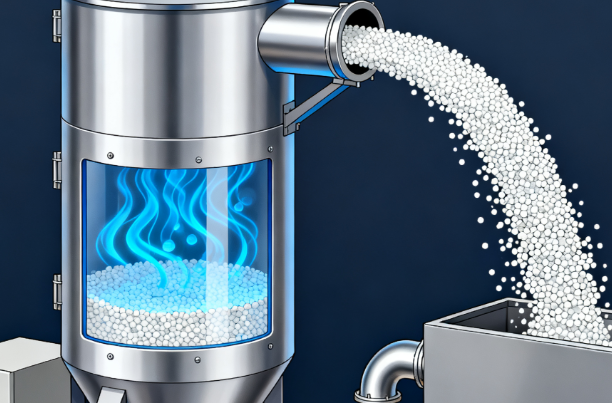
Staged Drying: Pre-dry with 80°C hot air (longer than regular PA66); then vacuum dry at 110°C to ensure moisture content ≤0.2%; use a 60°C heated sealed hopper for direct feeding to prevent reabsorption.
Material Selection: Choose high-melt-flow grades for thin-walled precision parts (wall thickness ≤1.2mm); select grades with continuous service temperature ≥200°C for high-temperature components (e.g., motor insulation shells); use high-glass-fiber materials with premixing technology to avoid fiber agglomeration.
2. Mold Design: Adapting to High-Glass-Fiber Processing
For modern high-flow, low-warpage PA66 modified materials, update mold design beyond traditional parameters:
Gate & Runner Design: Use fan gates (width ≥3× the maximum part wall thickness); add hot runner pin gates for high-gloss parts to reduce weld lines. Enlarge runner diameter by 10%-20% compared to regular PA66; apply nitriding treatment to runners for high-glass-fiber composites to reduce wear.
Ventilation Optimization: Add 0.03-0.05mm deep, 8-12mm wide main vents at cavity ends; reserve 0.02mm micro-gaps on parting surfaces. Combine with vacuum-assisted ventilation to solve gas trapping and burning caused by fiber accumulation.
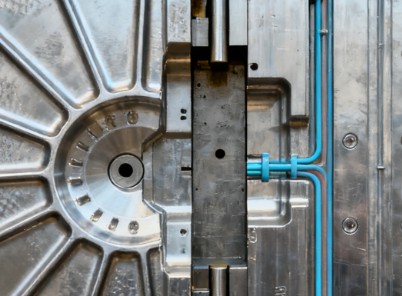
Cooling & Surface Treatment: Use 3D-printed conformal cooling channels (8-10mm from part surface); control water temperature difference ≤5°C for parts with uneven wall thickness. Adopt mirror polishing (Ra ≤0.02μm) for paint-free parts, or texturing (Ra 0.8μm) to hide fiber exposure.
3. Process Optimization: Precision Control with Smart Equipment
Leverage modern injection molding machine intelligent control systems to build a matching model for temperature, pressure, and speed, referencing industry material databases:
Staged Temperature Control: Keep the feed zone at 80-90°C (prevent bridging); set the front barrel section to 270-280°C and rear section to 280-290°C (avoid degradation). Control mold temperature at 80-110°C via oil temperature machines (up to 120°C for heat-resistant materials).
Injection & Holding Pressure: Use multi-stage injection speed (30mm/s initially, 80mm/s mid-stage, 20mm/s at the end). Set holding pressure to 55%-60% of injection pressure, with holding time of 6-8 seconds; use cavity pressure curve closed-loop control to avoid stress cracking.
Screw Parameter Adaptation: Control screw linear speed at 0.8-1.0m/s and back pressure at 3-5MPa; use bimetallic screws to reduce wear. Call built-in machine parameter packages to reduce trial runs by 60%.
4. Post-Processing & Quality Control: Building a Digital System
Integrate modern digital testing technology to establish full-process control from material to finished product, following international quality standards:
Post-Processing: Adopt stepped annealing (100°C for 1 hour, then 80°C for 2 hours, furnace cooling) to reduce internal stress by over 70%. Use laser micro-polishing for precision parts to remove fiber burrs (surface roughness ≤Ra 0.1μm).
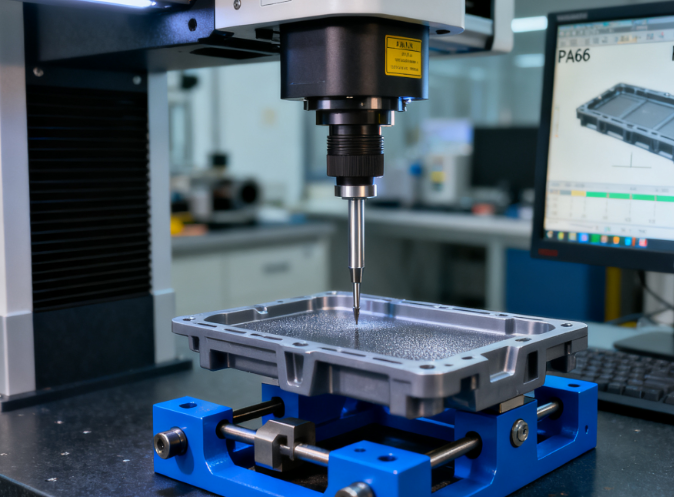
Digital Quality Control: Use 3D optical scanners (accuracy 0.001mm) for 100% inspection of key parts. Build a linked database to record material batches, process parameters, and test results. Trigger automatic machine shutdown and adjustment alerts if mold temperature deviates by ±3°C or injection pressure fluctuates by over 5MPa.
Conclusion
Precision injection molding of PA66 glass fiber-reinforced parts has entered a new era of "material modification + smart processes + digital control." By optimizing material selection, mold design, smart process control, and full-process digital management, stable mass production of precision parts (tolerance ≤0.02mm, no fiber exposure) can be achieved, providing reliable core component solutions for new energy vehicles, high-end electronics, and other fields.