Prevention of Thermal Decomposition and Yellowing in PVC Injection Molding
PVC often suffers from yellowing and degradation during injection molding. The main cause is thermal and oxidative degradation under high temperature, high shear, and long?time heating, which releases hydrogen chloride and forms conjugated double bonds, resulting in discoloration, black spots, silver streaks, and odor. These defects reduce appearance, mechanical performance, and service safety. Effective control requires a complete system covering formulation, processing, equipment, mold design, and production management, based on low-temperature processing, low shear, short residence time, and high stability.
Formula Optimization: Improve Thermal Stability from the Source
Formula is the first key to preventing PVC degradation. Heat stabilizers are essential. For general products, calcium?zinc composite stabilizers are recommended at 1.5–3 phr. For transparent parts, organotin stabilizers are preferred at 0.8–1.5 phr. Auxiliary stabilizers such as epoxidized soybean oil can be added to enhance long?term stability and reduce initial discoloration.
Only high?purity injection?grade PVC resin should be used to lower impurities and decomposition risks. Recycled material should be limited to less than 20% and fully dried to below 0.05% moisture. A balanced internal and external lubrication system helps reduce shear heat and ensure uniform plasticization without excessive plate?out or poor fusion.
Process Control: Low Temperature, Low Shear, Short Residence Time
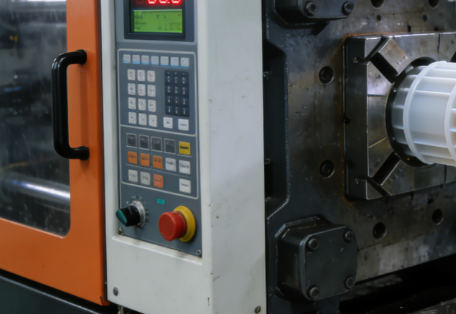
Processing parameters directly influence yellowing. Barrel temperatures must be set in stages: rear 140–160°C, middle 160–175°C, front 170–185°C, nozzle 165–180°C. Temperatures above 200°C must be avoided.
Melt residence time in the barrel should generally be less than 15 minutes. Shot volume should be 30–70% of barrel capacity to avoid prolonged heating. Screw speed is set at 50–80 rpm and backpressure at 5–10 MPa to reduce shear heat. Injection uses low speed and low pressure to prevent overheating. Mold temperature is maintained at 30–50°C for fast cooling and reduced internal stress.
Equipment and Mold Design: Reduce Dead Zones and Trapped Material
Special screws for PVC with L/D 20–22 and compression ratio 2.5–3.0 are recommended to avoid excessive shear. The screw, barrel, and check ring should be smooth and free of wear or dead zones where material can degrade.
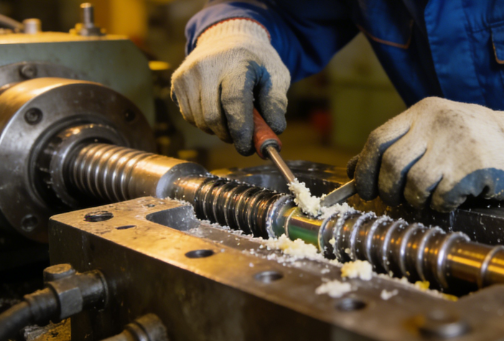
Melt runners should be short, thick, and smooth. Gates should be adequately sized to avoid high?speed friction overheating. Vents with depth 0.02–0.04 mm must be provided at flow ends and weld lines to release gas and prevent burning. Regular cleaning of the mold and barrel is necessary to avoid contamination by degraded material.
Production Management and Stability
Stable operation reduces yellowing significantly. Raw materials must be dry and clean. Frequent shutdowns, large temperature changes, and excessive purging should be avoided. Products should be cooled quickly and stored in dry, dark, ventilated conditions.
If yellowing appears, lower barrel temperature, reduce screw speed, and clean the system. Severe degradation requires full inspection of stabilizers, screw wear, and temperature control, followed by thorough cleaning.
Summary
PVC yellowing results from thermal degradation, shear overheating, material stagnation, and unbalanced formulation. By combining stable formula, low?temperature processing, suitable equipment, reasonable mold design, and strict management, manufacturers can effectively reduce decomposition and produce high?quality PVC parts with consistent appearance and performance.