The key points from the design to the manufacture of injection molds for electronic products
I. Key Points in the Design Phase
(1) Product Design Review
An accurate product model is the foundation of mold design, requiring clear definition of product dimensions, shape, and material parameters. For example, high-strength, easy-to-mold ABS or PC/ABS alloy materials are commonly used for phone casings, with dimensional tolerances controlled to ±0.05mm or tighter. Meanwhile, detailed analysis of product appearance, assembly relationships (e.g., fit clearance between buttons and the housing), and functional structures (e.g., load-bearing strength of interface buckles) is necessary to avoid potential mold design issues and prevent mold rework due to product structural flaws later.
(2) Mold Structure Design
Parting Surface Design: The parting surface should be positioned at the product’s maximum contour for easy demolding, while also considering appearance—placing the parting line in a hidden location (e.g., bottom of phone frames, inner side of earphone housings). For electronic products with appearance requirements, the flatness and fit tolerance of the parting surface must be controlled within ±0.01mm to prevent flash or burrs from affecting product assembly and appearance.
Gating System Design: The sizes of the sprue and runner must match the product size and plastic fluidity. Hot runner systems are preferred for electronic product injection molding—they maintain melt temperature, reduce pressure loss, shorten the molding cycle by over 20% (e.g., for tablet casing molds), eliminate gate marks, and increase product yield from 85% to approximately 92%.
Cooling System Design: Conformal cooling channels arranged according to the product shape can improve mold temperature uniformity by 30%-40% and shorten cooling time by 20%-30%. For instance, optimizing the cooling channels of laptop heat sink module molds and using low-temperature coolant can reduce product warpage by 60%, meeting precision assembly requirements.
Ejection Mechanism Design: Components such as ejector pins and push plates must be precisely arranged to avoid ejection marks. For plastic parts with undercut structures (e.g., electronic connectors), side core-pulling mechanisms like slides or angled ejectors are required to ensure smooth demolding without damaging small product structures (e.g., pins, card slots).
(3) Mold Material Selection
Mechanical Property Matching: High-yield molds (e.g., charger casing molds) require wear-resistant materials such as Cr12MoV mold steel. After quenching and tempering, its hardness reaches HRC58-62, enabling it to withstand over 100,000 injection cycles and reduce dimensional deviations caused by mold edge wear.
Thermal Property Adaptation: H13 steel (4Cr5MoSiV1) has excellent thermal fatigue resistance and thermal conductivity, making it suitable for electronic molds requiring frequent heating and cooling cycles. It reduces thermal cracking and shortens cooling time by approximately 15%-20%, improving production efficiency.
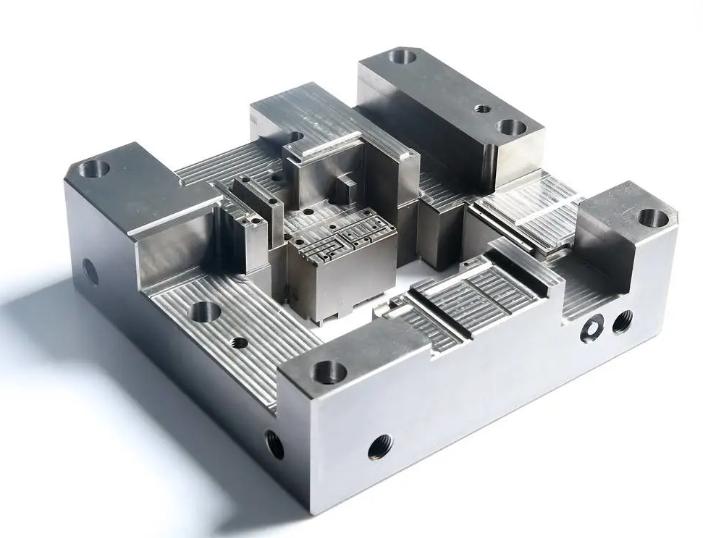
Surface Quality Assurance: Molds for high-precision appearance parts (e.g., support parts for phone glass covers) require high-purity materials such as ESR-refined S136 mirror steel. After polishing, its surface roughness reaches Ra0.05-0.1μm, avoiding surface defects like pitting or air holes on plastic parts caused by material impurities.
II. Key Points in the Manufacturing Phase
(1) Mold Part Processing
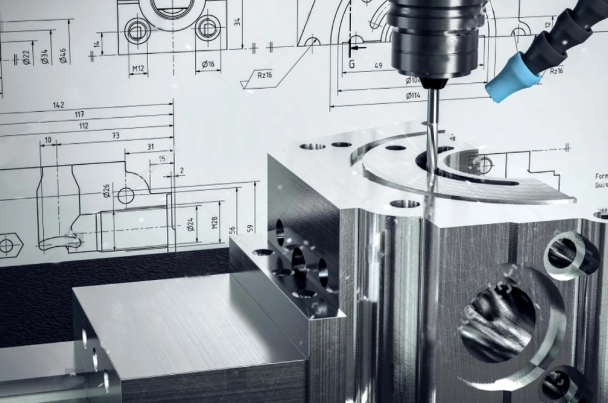
CNC Machining: 5-axis high-speed milling achieves a precision of ±0.005mm and a surface roughness of Ra<0.15μm, enabling efficient processing of complex curved surfaces (e.g., for phone camera module molds). Wire EDM is used for high-precision holes such as ejector pin holes and guide pillar holes, with a precision of ±0.003mm and a surface roughness of Ra0.05μm, ensuring coaxiality and perpendicularity of key components.
EDM (Electrical Discharge Machining): Suitable for processing micro-cavities and narrow gaps in microelectronic connector molds. Precision EDM machines can achieve a mirror-finish EDM effect with Ra<0.1μm, a corner radius of less than 0.02mm, and a machining precision controlled within ±0.005mm, meeting the molding requirements of small product structures.
(2) Mold Heat Treatment and Surface Treatment
Heat Treatment Process: P20 pre-hardened steel is commonly used for small-batch molds (e.g., smart bracelet casing molds for the testing phase), with a hardness of HRC28-32 and excellent machinability, requiring no subsequent quenching. High-stress molds (e.g., power adapter casing molds) use H13 steel, which reaches a hardness of HRC52-54 after quenching and tempering, enabling long-term use under high-temperature and high-pressure conditions.
Surface Treatment Technology: After nitriding, the surface hardness of S136 mirror steel reaches HV900-1200, with improved corrosion resistance, making it suitable for molding plastics containing flame retardants. Physical Vapor Deposition (PVD) technology deposits hard coatings (e.g., TiAlN) on the mold surface, extending mold life by 2-3 times while improving plastic part demolding smoothness.
(3) Mold Assembly and Debugging
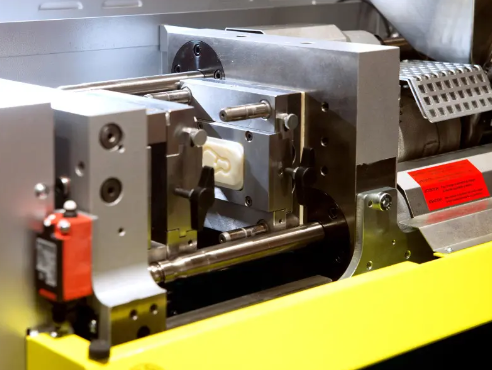
Precision Assembly: Laser alignment technology is used to ensure the coaxiality deviation of guide pillars and bushes is ≤±0.005mm. Relying on 3D digital assembly systems, part installation is guided by accurate 3D models to reduce human error and ensure mold sealing and positioning precision during clamping.
Parameter Debugging: During the test molding phase, 30-40 parameters need to be adjusted, including injection pressure (typically 50-120MPa), holding time (2-8s), and cooling rate (5-15℃/min). Through 5-8 test molding optimizations, product dimensional precision meets standards (e.g., smart watch casings with a tolerance of ±0.03mm) and there are no appearance defects such as scratches or sink marks.

III. Whole-Process Quality Control and Technical Trends
Quality Control Points: In the design phase, CAE simulation (e.g., Moldflow) is used to predict plastic part molding defects and optimize mold structures in advance. In the manufacturing phase, coordinate measuring machines are used to inspect key parts (e.g., cavities, cores), with precision errors controlled within ±0.002mm. After test molding, samples are inspected for dimensions and mechanical properties (e.g., impact strength, heat resistance) to meet electronic product industry standards (e.g., GB/T 14486-2014).
Technical Development Trends: With the miniaturization of electronic products, micro-injection molds (e.g., sensor casing molds) will increasingly rely on microfabrication technologies (e.g., nano-scale EDM). 3D printing can quickly manufacture mold prototypes, shortening the development cycle by 30%-50%. Smart molds will integrate temperature and pressure sensors to realize real-time monitoring of the molding process, further improving product consistency.