Detection methods for optical lenses
Optical lenses as an important part of industrial development, its material applications are also diverse, in addition to the familiar glass, many are made of plastic through injection molds.
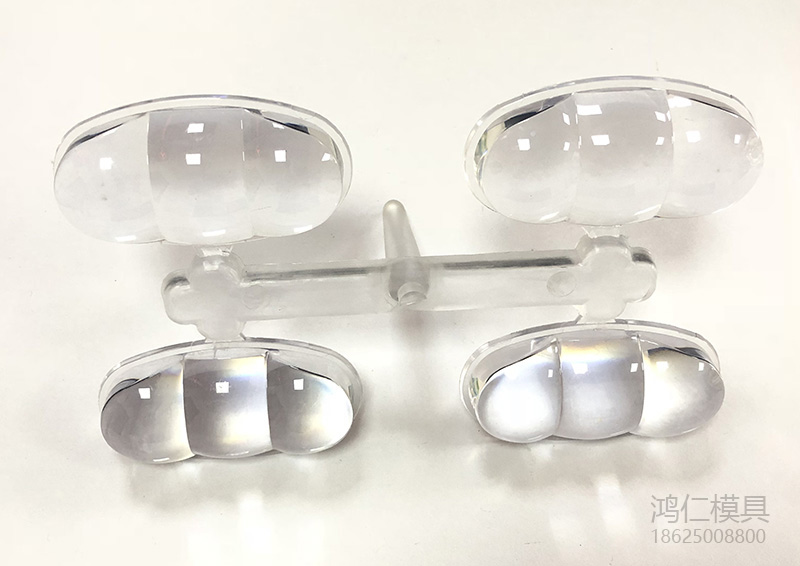
The inspection of optical lenses is mainly to ensure that the quality of the lens meets the requirements of design and use. The testing method can be divided into several aspects, including the measurement of the geometrical parameters of the lens, the optical performance test and the surface quality evaluation. Here are some common detection methods:
Geometric parameter measurement:
Dimensions: The diameter and thickness of the lens are measured directly by tools such as micrometer and vernier caliper.
Radius of curvature: This can be measured using an optical curvature meter (such as an interferometer) or a Spherometer.
Defocusing and optical axis deviation: Usually detected by an optical tester such as a laser confocal scanning microscope.
Optical performance test:
Focal length: It can be measured by optical bench and collimator, or directly by imaging method.
Transmittance and reflectance: measured using a spectral photometer or spectrophotometer.
Chromatic aberration: Chromatic aberration can be measured by a spectral analyzer or specific chromatic aberration testing equipment.
Wavefront aberration: The difference between the shape of the light wavefront and the ideal wavefront is measured using a wavefront sensor such as the Shack-Hartmann wavefront sensor.
Modulation transfer function (MTF) : The fidelity of the lens to detail is measured using the MTF tester.
Surface quality assessment:
Surface roughness: measured by Atomic force microscope (AFM) or white light interferometer.
Scratches and lumps: Assessed by tools such as optical microscopes according to ISO standards (e.g. ISO 10110) and lens manufacturer specifications.
Wavefront distortion: Irregularities and errors on the surface of the lens are detected by an interferometer, such as a dual optical path interferometer.
Environmental and Mechanical testing:
Temperature and humidity test: check the stability and performance of the lens in different temperature and humidity environments.
Vibration and shock tests: Simulate the possible effects of transport or use of the environment on the lens.
Comprehensive performance test:
Imaging quality testing: The lens is installed in a specific optical system and its overall performance is examined by imaging.
Depending on the needs, the above methods can be used alone or in combination to fully evaluate the performance of the lens and ensure that the specific application criteria are met. For high-precision optical applications, the inspection process will be more rigorous and more advanced measuring equipment and technology may be used.